❋
Dallas Urban Canopy
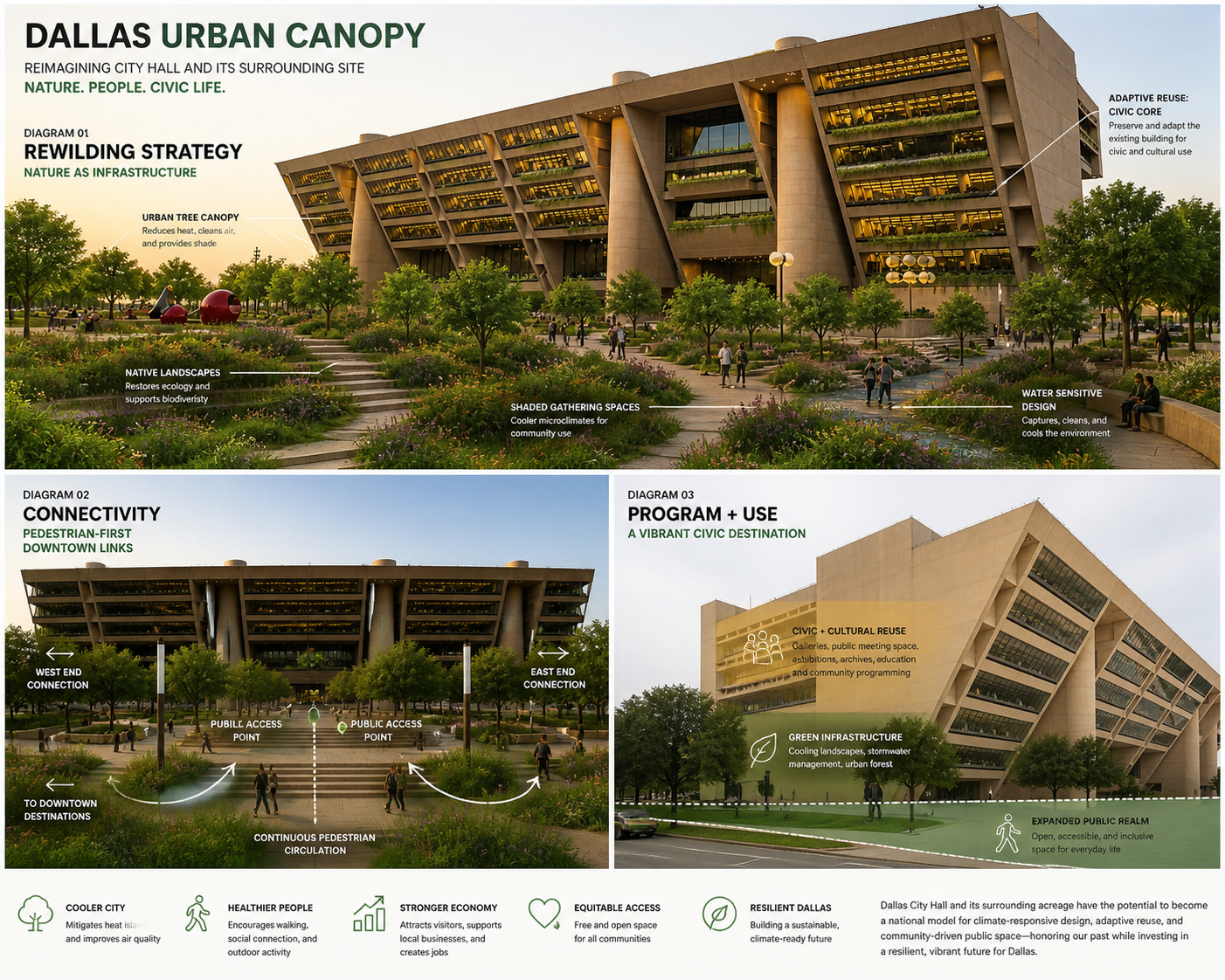
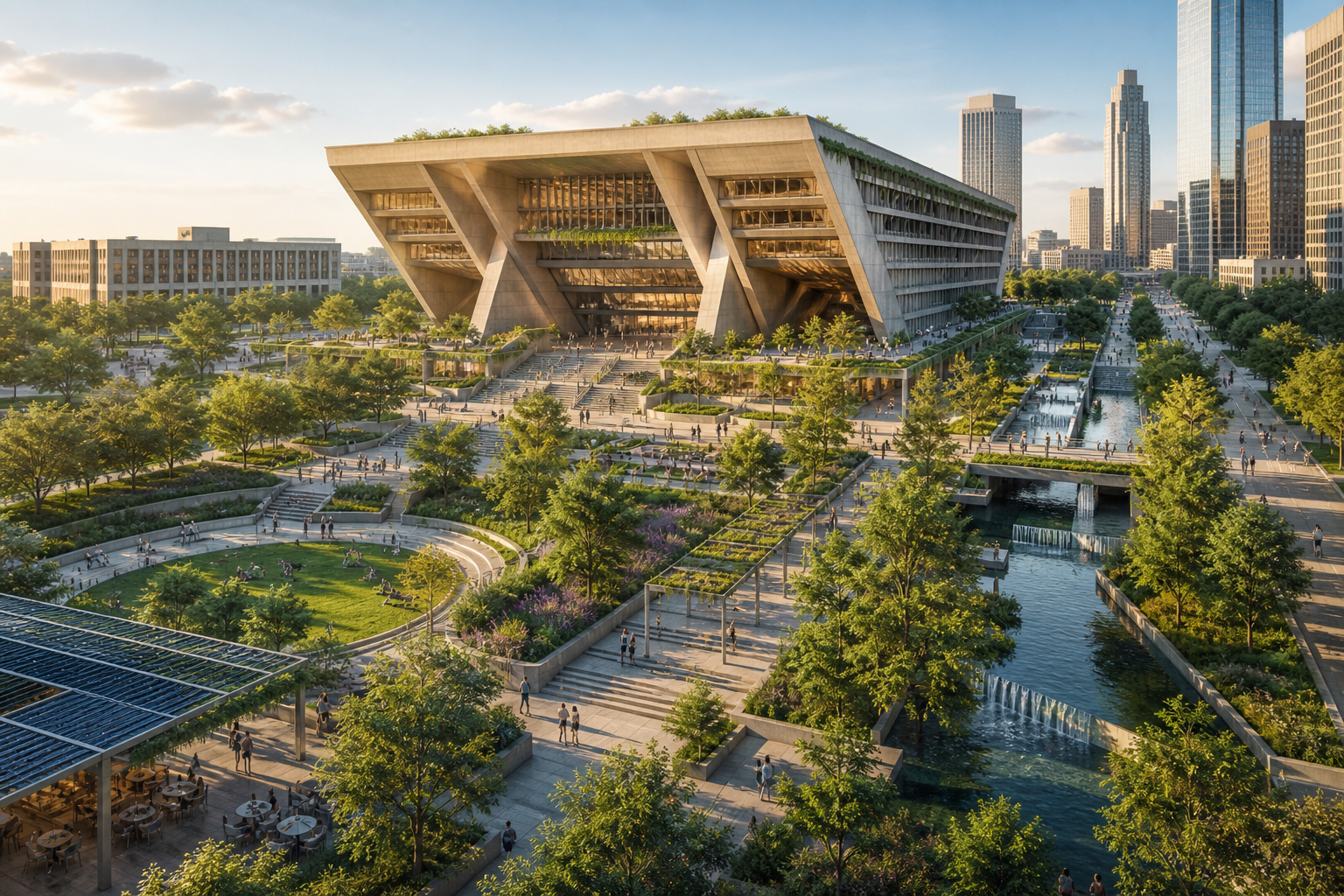
A Defining Opportunity for DallasThis proposal reimagines Dallas City Hall as a civic and cultural anchor within a climate-responsive public landscape. By integrating green infrastructure, adaptive reuse, and pedestrian-first design, the project transforms the site into a shaded, accessible, and economically active urban destination.
❋ Nature as InfrastructureTree canopy, landscape systems, and water-conscious design reduce heat, improve air quality, and create a more livable public environment year-round.
❋ Civic + Cultural ReuseThe existing building is preserved and reactivated as a flexible civic hub—supporting exhibitions, public programming, and community gathering.
❋ Pedestrian ConnectivityA network of shaded pathways and open access points prioritizes walkability, linking downtown districts and encouraging everyday use.
❋ Public Realm + AccessOpen, inclusive space designed for all—supporting rest, movement, events, and informal gathering without barriers to entry.
Proven Models for Economic, Environmental, and Cultural Impact
Through long-term investment in urban greening, Singapore has redefined itself as a “City in a Garden,” using landscape systems to mitigate heat, improve air quality, and enhance livability. This approach extends beyond environmental function into branding and global perception, where architecture, landscape, and graphic clarity work together to create a cohesive and highly marketable urban identity.
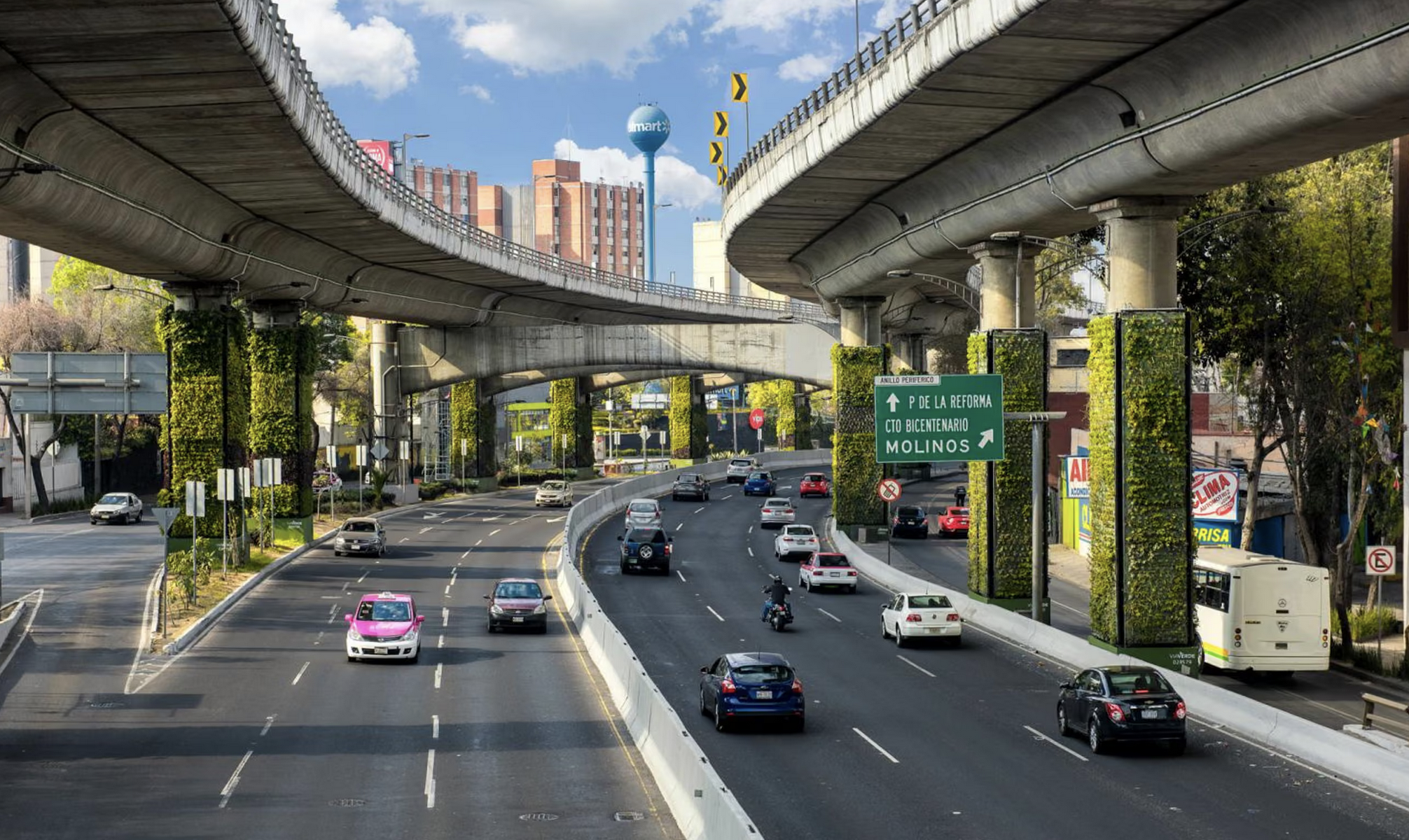
Facing significant air pollution and urban heat challenges, Mexico City has implemented large-scale greening strategies, including expanded parks, tree planting initiatives, and pedestrian-first public space design. These efforts have improved air quality, reduced heat, and reactivated public life—demonstrating how environmental investment can directly enhance both livability and long-term urban resilience. Reference Via Verde project.
The 1968 Olympics in Mexico City stand as a landmark example of how design can shape a city’s global identity. Through a bold, cohesive graphic system—spanning architecture, wayfinding, typography, and urban experience—the Games transformed Mexico City into an internationally recognized cultural destination. The legacy demonstrates how integrated design, from the built environment to visual communication, can elevate a city’s presence, unify diverse audiences, and leave a lasting cultural and economic impact.
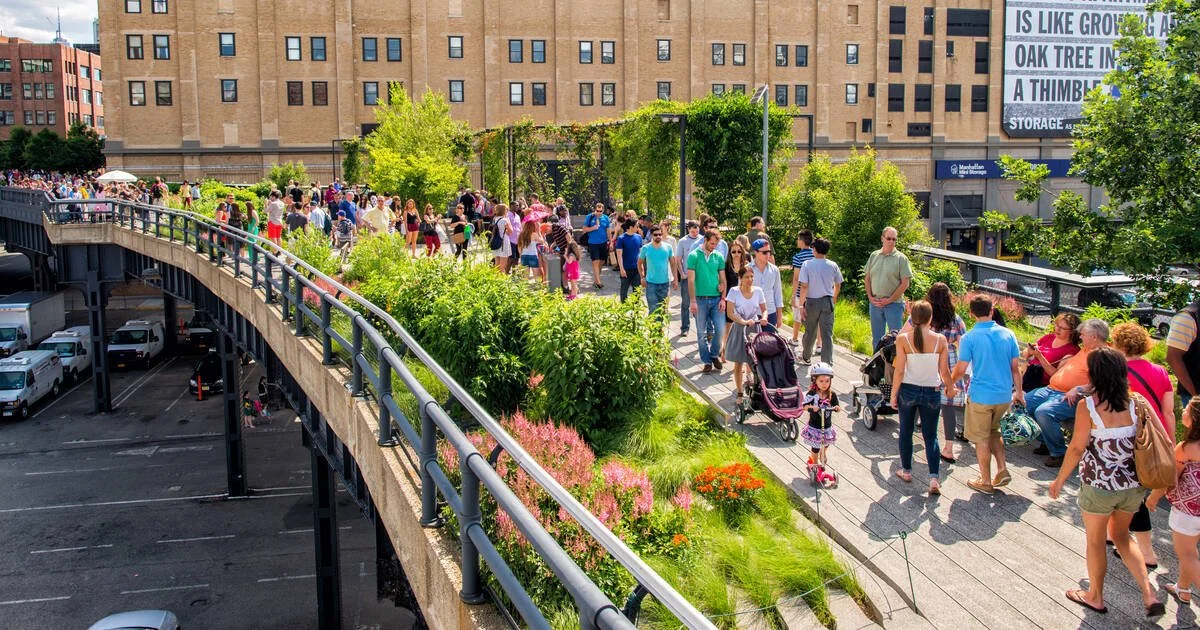
A disused elevated rail line transformed into a world-renowned public park, the High Line demonstrates how reclaimed infrastructure can drive significant economic growth, increase property values, and attract millions of visitors annually. Its success lies not only in landscape design, but in its strong visual identity, programming, and integration into the cultural fabric of the city—positioning it as both a civic amenity and a global destination.
This proposal outlines an adaptive reuse strategy for Dallas City Hall that integrates public space, environmental design, and community-oriented programming. The concept retains the existing building and introduces a phased transformation of the surrounding site into a shaded, walkable, and accessible green space.
Informed by precedents such as The High Line and urban greening strategies implemented in Mexico City and Singapore, the proposal focuses on reducing urban heat, improving pedestrian connectivity, and enhancing quality of life. The result is a cost-conscious, future-oriented civic asset that balances preservation with innovation. The Texas way.