Established in January 2020, Sub Rosa began as a digital journal dedicated to highlighting points of inspiration—a reflection of the systematic groundwork behind one’s practice. Within these pages, you’ll find the people, objects, moments, locations, and histories that have motivated me.
All views are my own.
Chronicles | Midyear 2022
My intent for Sub Rosa is to provide access to curated information centered on art and activism. Valuing my time as an artist, I’ve been thinking of a way to offer readers the choice to pay for my chronicles. Below is an option to support my project for as little as $1 one time or however you’re comfortable.
All images by Alexandra Hulsey / embedded with source links.
A R T
Favorites So Far
It's been a while, and I thought reconnecting via another chronicle made sense in the middle of the year. Maybe Sub Rosa is a bi-yearly thing now. Anyways, I'd like to share some of the art I've enjoyed seeing so far. Found in New Orleans Museum of Art this July, Dallas Art Fair in April, and Latino Cultural Center in May.
Some commonalities in these artworks below are that they're fantastical, colorful, shapely, entertaining, and offered me a much-needed pause.
Larry Bell, Pacific Red (VI), 2016-2017. New Orleans Museum of Art.

Gert & Uwe Tobais, I don’t Want Love, 2022. Cassina Projects at Dallas Art Fair.

Joan Miró, The Red Disk, 1960. New Orleans Museum of Art

Stefanie Popp, Obelism (Skilos), 2020. Keijsers Koning at Dallas Art Fair.

Michael Henry Hayden, Internal Clock, 2020. Moskowitz Bayse at Dallas Art Fair.

Vladimir Waone, Melody of Unkown Moments, 2021. Sapar Contemporary at Dallas Art Fair.

Areum Yang, Until I Find My Home, 2022. Derek Eller Gallery at Dallas Art Fair.

Carol Bove, Mood, 2017. New Orleans Museum of Art.

Kapoor, Anish, Untitled, 1997. New Orleans Museum of Art.

Elizabeth Osborne, Zinnias With Chair, 2017. Barry Campbell Gallery at Dallas Art Fair.

Raymond Yeboah, New Beginnings. Latino Cultural Center, Dallas, TX.

Fabian Treiber, This Place, 2022. Anat Ebgi Gallery at Dallas Art Fair.
100 W Corsicana
Located in Downtown Corsicana, 100 W Corsicana serves as a prestigious creative residency for rigorously working artists from visual to literary. I visited for the first time in May for 100W x 10YRS, a celebration of the conception of 100 W Corsicana. The building and its surroundings are hauntingly beautiful. It inspired me to continue a project I explored in college, where you ink up a portion of a textured surface, place paper on top, and press into it to make a monoprint.
The application for 2023 residencies closed on September 1st, and I’m eager to see the next cycle of artists.

100 W Corsicana

Downtown Corsicana

Downtown Corsicana

STOREFRONT

100 W Corsicana

100 W Corsicana

100 W Corsicana

100 W Corsicana


The residency also has a bookstore called STOREFRONT, where you’ll find literature and artwork by resident participants. I picked up Tatiana Ryckman’s I Don’t Think of You (Until I Do) and, more recently, Seven Samurai Swept Away in a River by Jung Young Moon.
Corsicana reminded me how much I appreciate old buildings and old things, which in a way brings me to our road trip to New Orleans.
New Orleans
I've been to NOLA a lot, in fact, twice this year already, but I visited the New Orleans Museum of Art for the first time in July. It's relatively small, and its curation is one of my favorites I've ever seen! The vibrant modern art galleries displayed household named heartthrobs from Warhol, Modigliani, Kasner, and Miró with many others to have a unique conversation I felt like I was a part of. At the same time, the contemporary gallery focused on new acquisitions of work by BIPOC, LGBTQIA+, and female-identifying artists, which was badass in concept and execution. Outside was a massive sculpture garden that placed artwork complementary to the native swampy environment that felt otherworldly.
New Orleans has a lot of dualities to note, like placement/displacement, authenticity/facade, beauty/dismay, and stillness/chaos. I'm glad to have reflected on these this January and July, which felt especially meaningful in the context of 2022, if that makes sense. Some things feel new, some old, and there’s some new/old feelings, plus everything in between.




L O C A L
Dallas Artist Resources
Texas froze again in February, flooding circulated through the city in August, and temperatures reached as high as 109°F. throughout the summer, while the Dallas Climate Action seems over-ambitious for a city with 62 desert infrastructures.
One of the most significant ways individuals can make a change is to stop or cut down on meat and dairy in whatever way they can—also, taking agency on your own money. Consider alternative options for how much plastic accompanies what you're buying, what excess looks like for you, donating instead of throwing away, and research if the companies you shop at show actions against their role in climate change.
M U S I C
Something to listen to post-storm
Chronicles | May 2021
May presented me a theme of involving; cloud iridescence, lessons from flowers, how a smell makes you feel, and spatial learning from nature's patterns.
A R T
New Mexico
Last month, I questioned what draws an artist to New Mexico. I found descriptions of inspiration by its space and light. After going myself, I understand the appeal of the quiet landscape. Muted browns and soft greens cover the ground while the sky is vivid, allowing for intense dualities. Although this cloud iridescence pictured above was seen in Amarillo, I think it was a good bookend to the trip. I learned that it’s a phenomenon that occurs when small water droplets scatter light causing us to see colors.
L I T E R A T U R E
Flowers and Symbolism
I think about flowers conceptually because I reference them a lot in my artwork. The article Flowers Are the Ultimate Symbol was an influential read. Jessi Jezewska Stevens covers points in history when flowers and their connection to femininity intertwine.
British dictionaries in the 1800s started to concrete a flower’s meaning to specifically feminine associations of that time, lending to projections on flowers and women via a male perspective. Stevens states that the connection is that both are passively productive. But, with characterization comes abilities for subversion. Using the opportunity to make our interpretations and relationships to flowers become empowering.
“The women in my family tell me that gardens remind them of life. Their flower beds attract actual bees and butterflies, and, in fact, were specially designed as entomological paradises. I look at their wild flowers, weedy and rangy, cheerful in a flash thunderstorm. They are braver than I am, I think, both the flowers and the women. Someday, I will look back on them as those who taught me to accept the final silence; the only ones who ever tried, in earnest, to teach me how to die.” Jessi Jezewska Stevens, Flowers Are the Ultimate Symbol

Aroma and Symbolism
It’s been over a year since Covid-19 presented its consequences. Loss of smell is one for most who catch it and sometimes permanent. In consideration, I’ve been practicing reflecting on what aroma means for me. Aatish Taseer deals with a similar thought in the article, The Fragrances That Changed the Field. Additionally, his writing follows the history of Oudh between and fragrance’s relationship between East and West. He calls on his own experience with aroma as a kid in India in the eighties. In the 1800s, as mentioned before, florals became associated with femininity as well as, pureness, and hygiene. Taseer explains how by the 1970s, woody aromas began to represent feminine freedom, independence, and strength.
Using Nature for Spatial Learning

Alex Wolf, who creates visual systems for spatial learning, was interviewed in the article, The Daily Heller: Visualizing Learning Patterns Through Nature’s Spatial Patterns. Her goal with the Pattern Alphabet is to introduce a way of learning that focuses on understanding spatial awareness to then better understand language and mathematics. She references patterns and growth found in nature to make relations to her simple line drawings. Her system is useable for all ages and AI. The article is really interesting and delves into her motivation, logistics, and studies for the project. I was especially interested because spatial learning was vital for me as someone with dyslexia which, is apparently very common as touched on in the article. You can pre-order Pattern Alphabet on Wolf’s Kickstarter.
My intent for Sub Rosa is to provide access to curated information centered on art and activism. Valuing my time as an artist, I’ve been thinking of a way to offer readers the choice to pay for my chronicles. Below is an option to support my project for as little as $1 one time or however you’re comfortable.
Images by Alexandra Hulsey unless credited otherwise.


Chronicles | May 2020
Is there validation for ‘copycat’ architecture? Is physical museum closure the only way to ensure inclusivity? Listen to what Native American designers and business owners have to say about sustainability and fashion. Use literature as a tool to subvert systemic racism against Black Americans.
A R C H I T E C T U R E
Does Validation Exist When It Comes to ‘Copycat’ Architecture?
In order to promote local design, China is prohibiting the future construction of any ‘copycat’ architecture. Most have found these replicas to be off-putting making the new limitations primarily well received. Although the news poses questions. Is there a point in these buildings? If it’s simply rooted in humor like the Paris Texas Eiffle Tower, does intent make a difference? Additionally, I’ll note that China has also formed restrictions on what they call ‘weird’ structures too, which is probably a whole other subject.
A R T
Returning to Normal Versus Starting Anew
I found an interesting article in defense of changing the way museums operate post-COVID-19. The piece is published on Dezeen titled, “Rather than attempt to reconcile museums' contradictions, we should start again” written by Owen Hopkins. Dualities are presented like, “The homogenising effect of social media means museums risk losing much of what vitally distinguishes the experience of a visiting a museum” and “Museums should use the present moment to rethink the fundamental relationship between object and viewer”. On one hand, museums as Hopkins mentions are, “sacred spaces existing outside of time, connecting the past to the future of human existence.” Yet, there’s enraging inequality of representation. Is it possible that the only way to ensure inclusivity is to take away the museum’s physicality, to exist online? Or maybe, it’s a propelling start?
While we consider how the future of experiencing museums will evolve we can reference their actions taken presently. SFMoMA has decided to commission six creative collectives to occupy their website's homepage as part of their Community in Residence series. Each collective has one-week to respond to the prompt: What does it mean for artists to work collaboratively in the time of social distancing? The medium of this tenancy is called a digital mural, where links to resources, materials, and activities relative to their practice can be found. You can tune for weekly broadcasts Thursdays at 6 pm PDT and also find sources on SFMoMA's YouTube. SFMOMA’s YouTube channel serves for great content, generally speaking, I advise delving into their videos.
D E S I G N
How Creative Thinking Shapes Society
I’ve included some interesting inventions and solutions in consideration of our current climate. Factorydesign is a UK based aviation consultancy. They’ve envisioned inclusion of Isolation Screen Kits for future passengers. Domino Park’s staff took it amoung themselves to paint 30 symetrical 8ft circles to encourage social distancing. In an interview with Deezen they explained the process took a few bottles of 99¢ chalk paint and a couple of hours. The park sits in Williamsburg, Brooklyn.
F A S H I O N
Indigenous Artists and Sustainability
There are companies that have focused on sustainability at their core, the efforts made by the fashion industry to become more sustainable are rooted in consumerist wants and needs. An important perspective that we do not see enough of, is that of Indigenous people. The article 15 Indigenous Designers on What Sustainable Fashion Is Missing published by Vogue written by Christian Allaire showcases interesting points made by Indigenous artists. Via this article, I found amazing pieces from the small business that I urge you to check out as well.
“After a career of designing fast fashion clothing destined for landfills, I arrived at a place of creating with consciousness. I have long believed in sustainable design processes—handmade, restored and repurposed vintage, one-of-a-kind upcycling of textiles. Orenda Tribe is built on these tenets and fueled by my desire to honor my indigenous history, to protect our sacred lands, and a drive to help others. ”
A commonality between the interviewee’s statements is that one of the most impactful things you can do as a shopper is to make more thoughtful and less frequent purchases. So, I am also featuring an article by Man Repeller founder Leandra M. Cohen titled Hold that Cardigan! A List of Questions to Ask Yourself Before You Shop. It’s obvious we’re all online shopping and browsing more than ever but, it’s more important to not be impulsive. Some of the questions listed on the Man Repeller article are:
Do I already own something that serves the same purpose?
Is this one so much better, that I would feel compelled to donate three things in its place?
What do I have to give up to get it?
Can I afford it?
If it were more expensive would I still try to figure out how to buy it?
L I T E R A T U R E

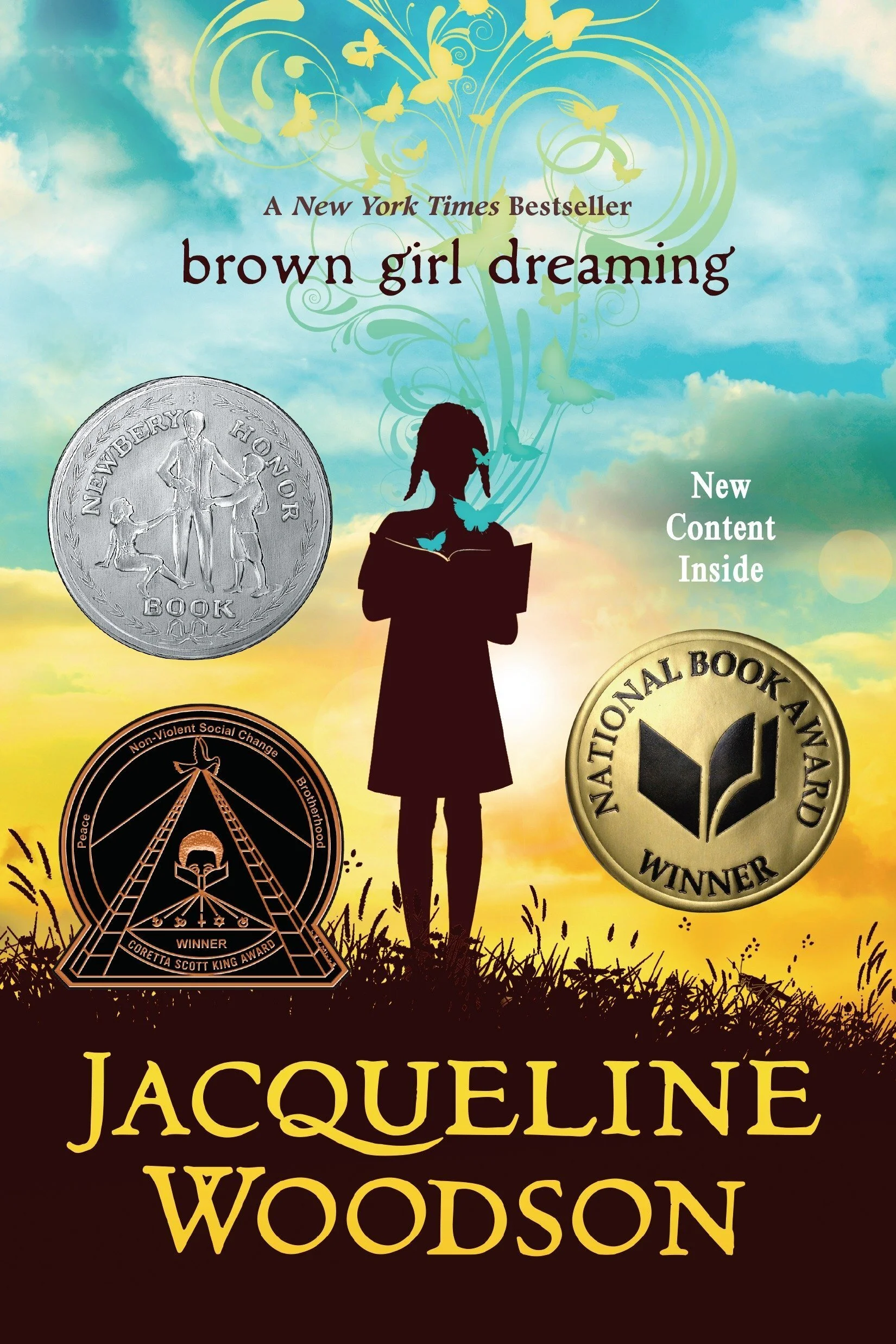


Some of the books I’m naming below are novels, memoirs, essays, or poems but all uniquely portray the topic of racial injustices against Black Americans. You’ll notice each link provided takes you to a source to read the author’s biography, a summary of the book, and to make a purchase. If you decide to purchase any of these books consider the links I’ve provided or a local bookstore. It’s important to use these sources as a powerful tool in prohibiting systemic racism in America, there is productive action to take alongside our reading lists.
Between The World And Me by Ta-Nehisi Coates
Brown Girl Dreaming by Jacqueline Woodson
Citizen: An American Lyric by Claudia Rankine
How To Be An Antiracist by Ibram X. Kendi
How We Fight for Our Lives by Saeed Jones
Notes from a Young Black Chef by Kwame Onwuachi
White Fragility: Why It's So Hard For White People To Talk About Racism by Robin DiAngelo
Sister Outsider by Audre Lorde
Survival Math: Notes on an All-American Family by Mitchell S. Jackson
The Autobiography Of Malcolm X by Malcolm X as told to Alex Haley
The Condemnation Of Blackness: Race, Crime And The Making Of Modern Urban America by Khalil Gibran Muhammad
The History Of White People by Nell Irvin Painter
The New Jim Crow: Mass Incarceration In The Age Of Colorblindness by Michelle Alexander